Project Overview
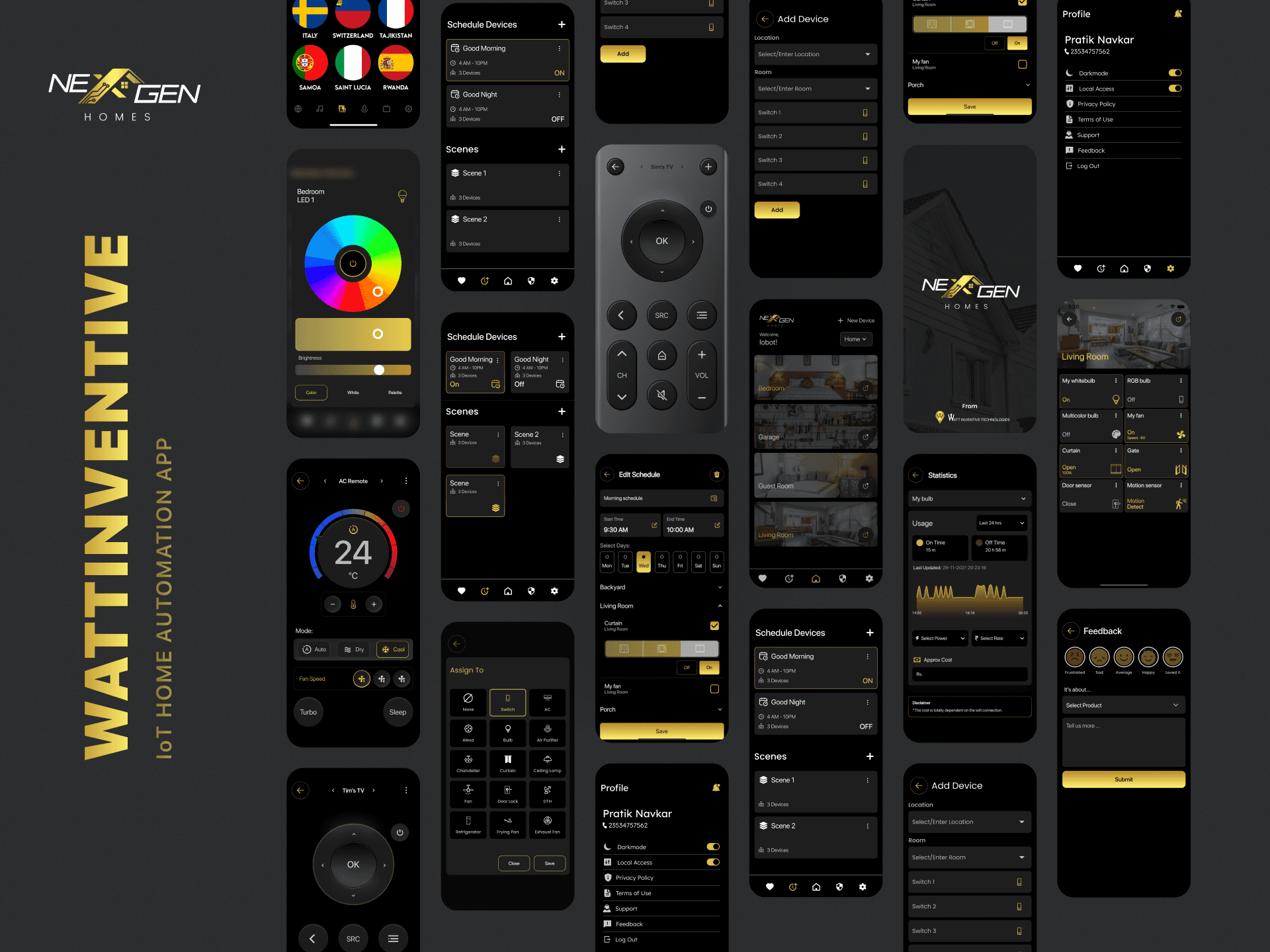
NexGen Homes is an intuitive mobile application developed for Watt Inventive Technologies, designed to seamlessly integrate and control smart home devices. The app offers users the ability to remotely operate and monitor their devices, set schedules, create sensor-based security scenes, and predict electricity usage for each device. With features like device grouping, over-the-air (OTA) firmware updates, and compatibility with voice assistants such as Google Assistant and Alexa, NexGen Homes aims to enhance the convenience, security, and efficiency of modern living spaces.
The Challenge
In the rapidly evolving landscape of smart home technology, users often face several challenges:
Fragmented Device Control: Managing multiple devices from different manufacturers can be cumbersome, requiring separate applications and interfaces.
Complex Scheduling: Setting up time-based schedules across various devices often lacks a unified platform, leading to inefficiencies.
Security Concerns: Ensuring home security through sensor-based automation requires reliable and user-friendly solutions.
Energy Management: Monitoring and optimizing energy consumption across devices is essential for cost savings and environmental sustainability.
User Accessibility: Providing a seamless experience that caters to both tech-savvy users and those less familiar with smart home technology is crucial.
Addressing these challenges necessitated the development of a comprehensive, user-friendly application capable of integrating various smart devices into a cohesive ecosystem.
The Solution
NexGen Homes was developed to provide a holistic solution to the aforementioned challenges, offering a suite of features designed to enhance user experience and device management:
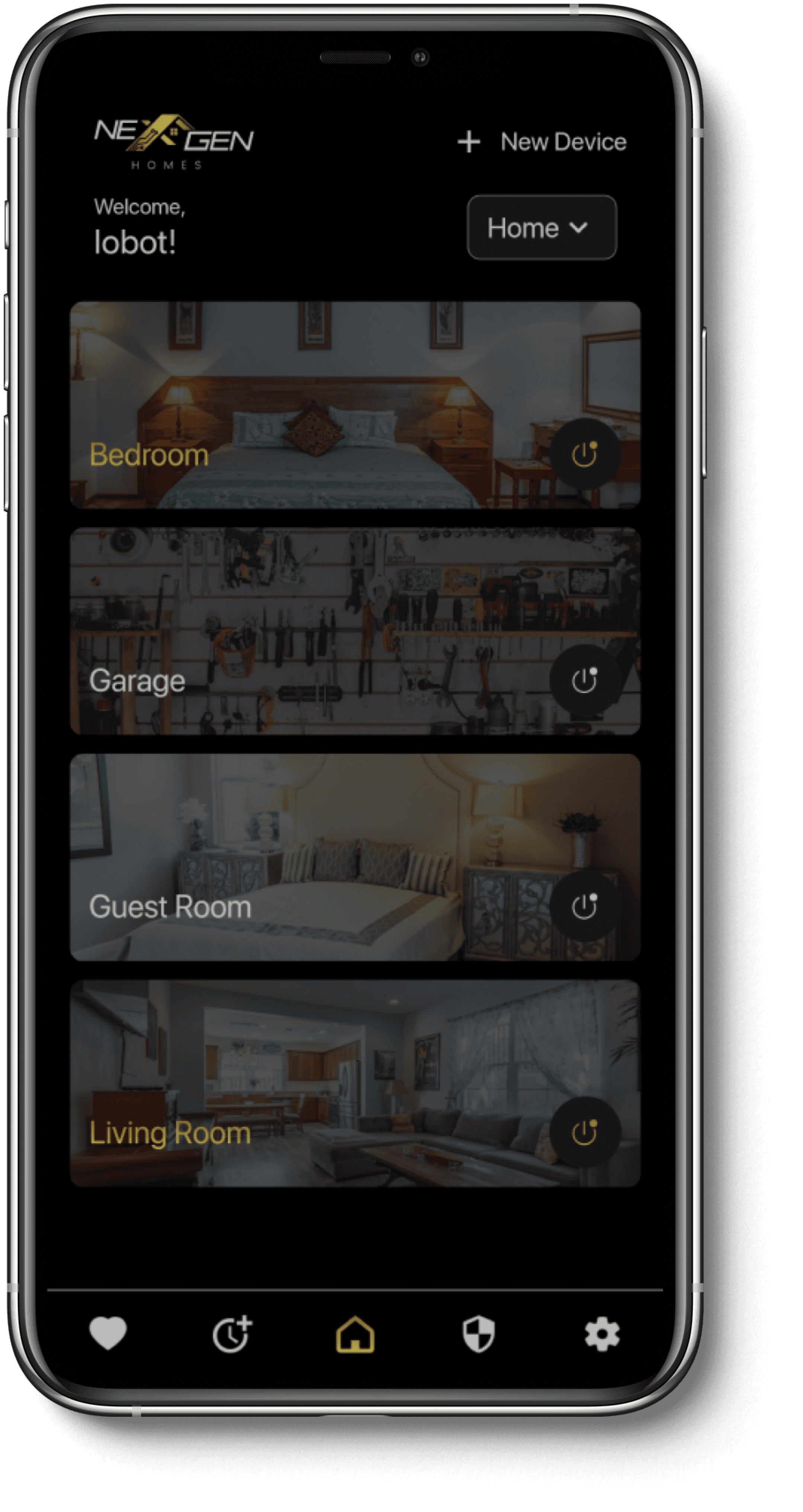
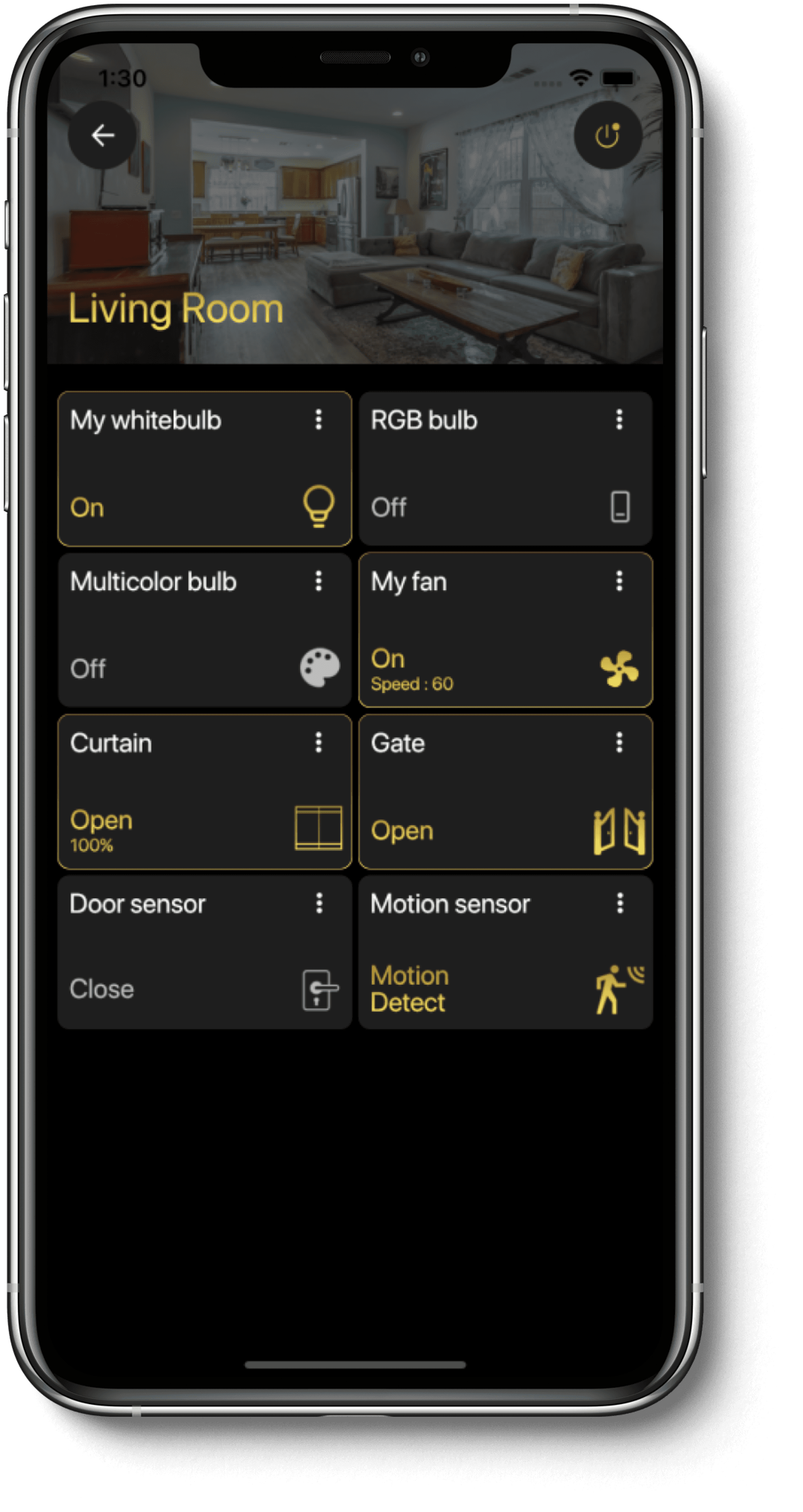
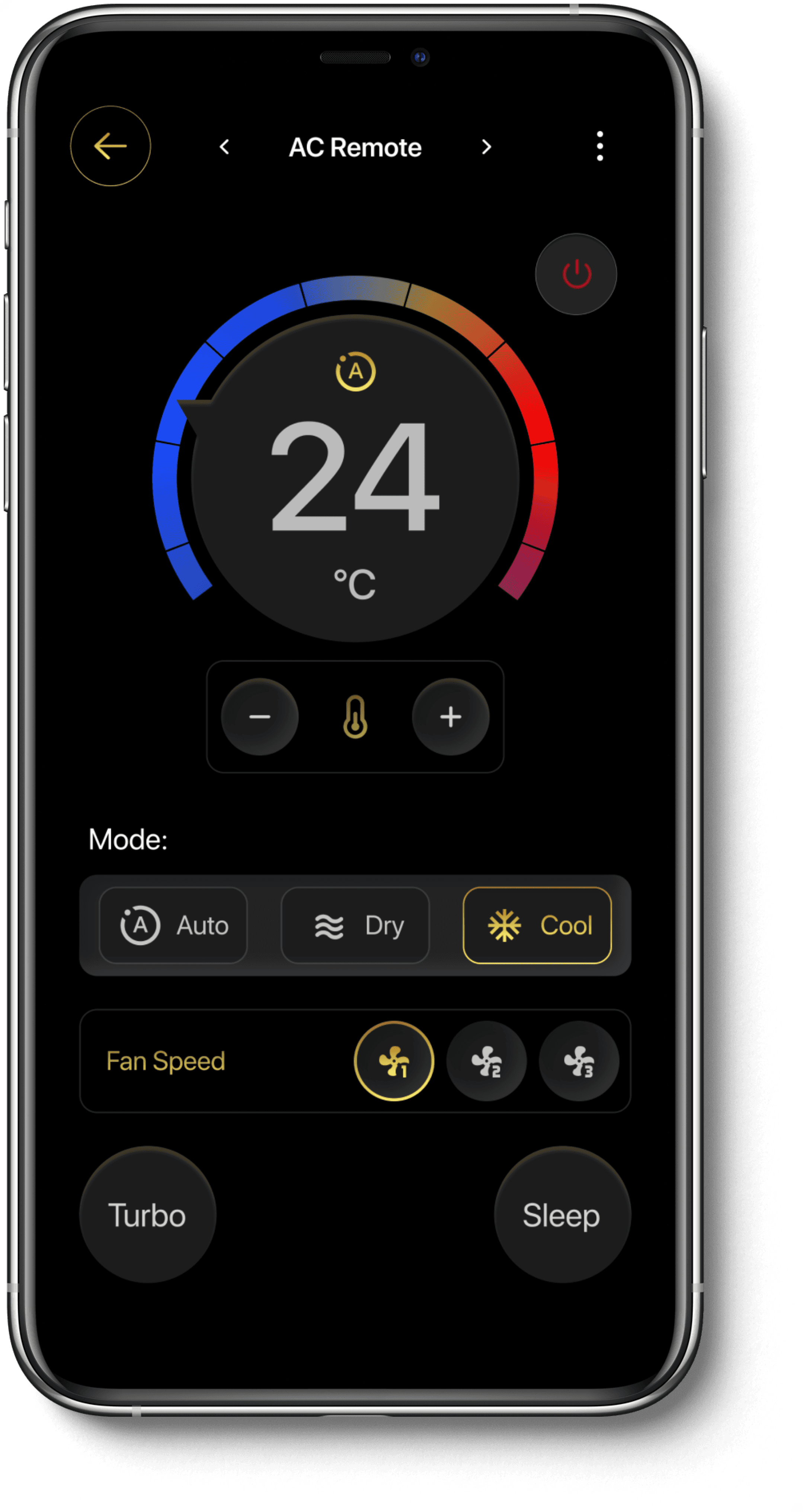
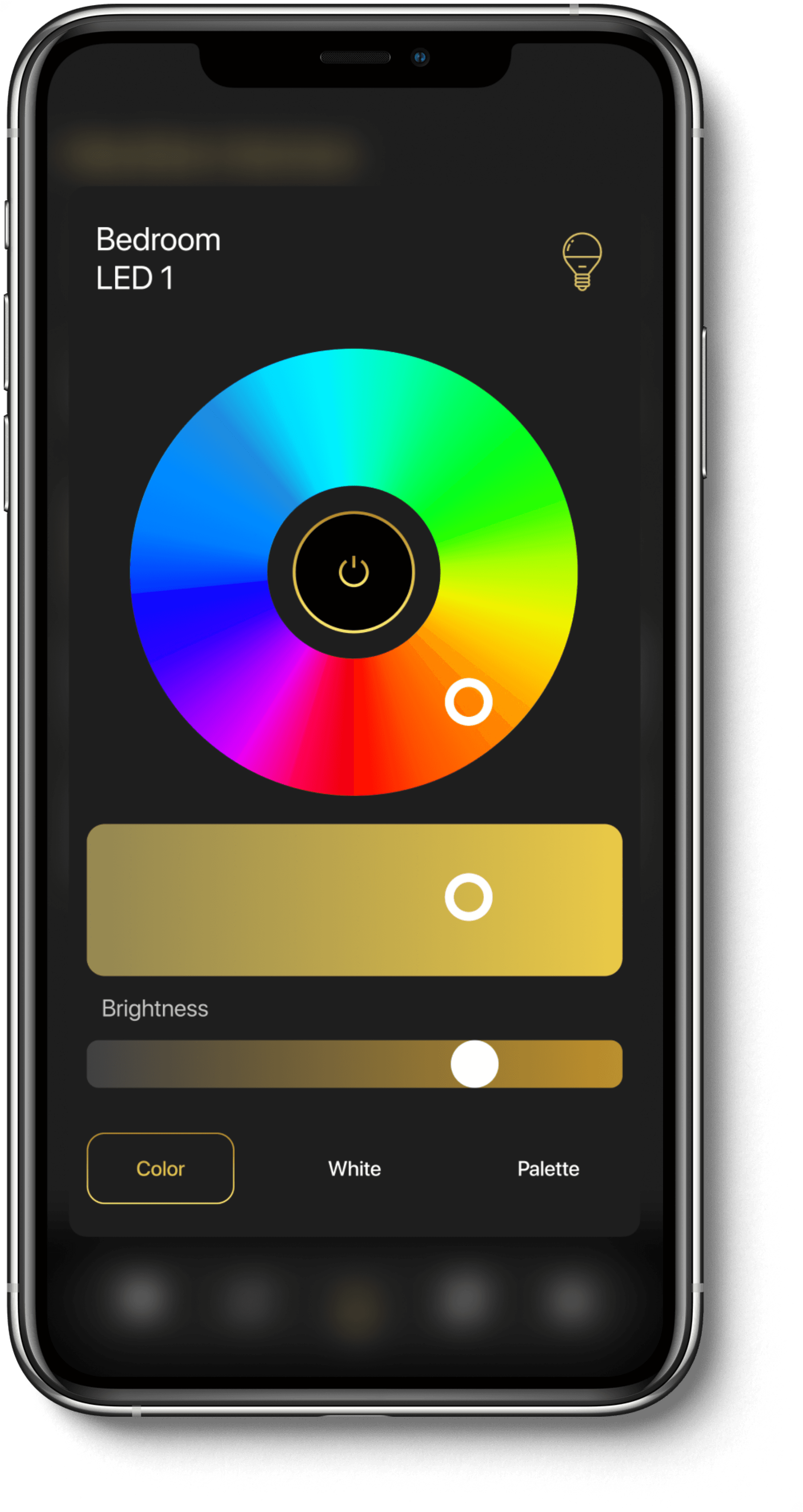
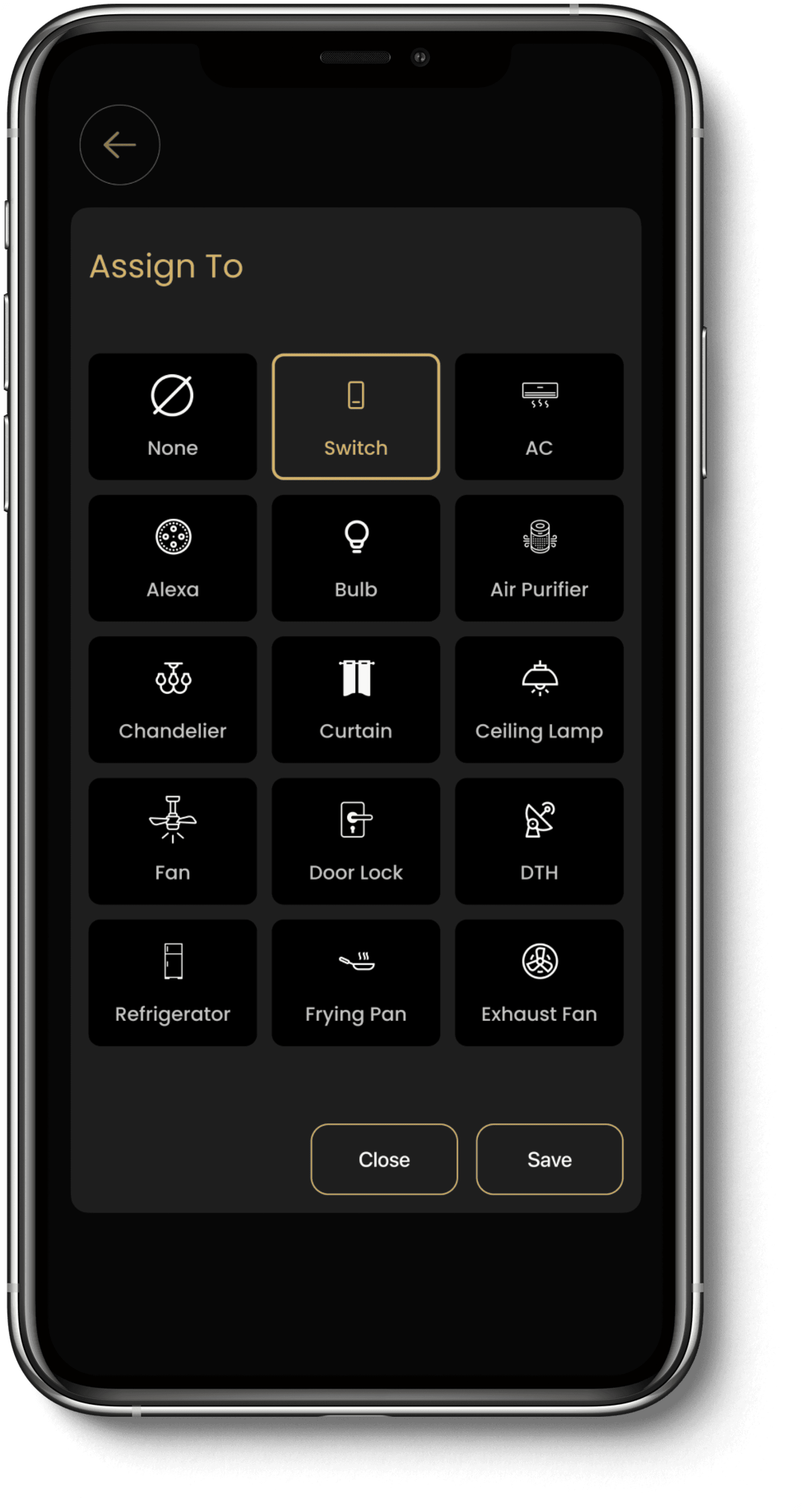
Unified Remote Control and Status Monitoring: Allows users to control and monitor all connected devices based on location and room, providing a centralized platform for device management.
Device Access Sharing: Enables users to share device access with family members or trusted individuals, facilitating collaborative control and monitoring.
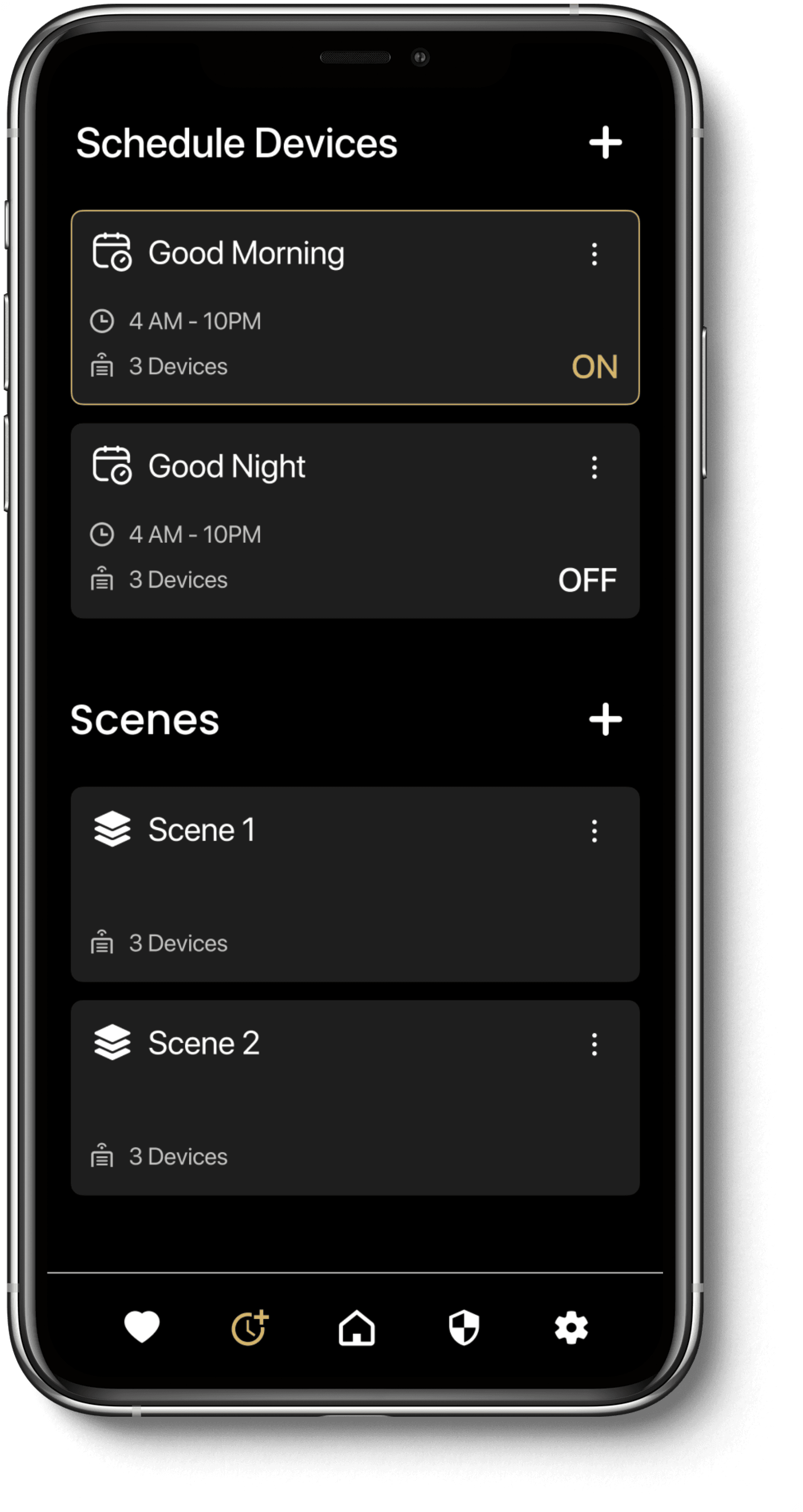
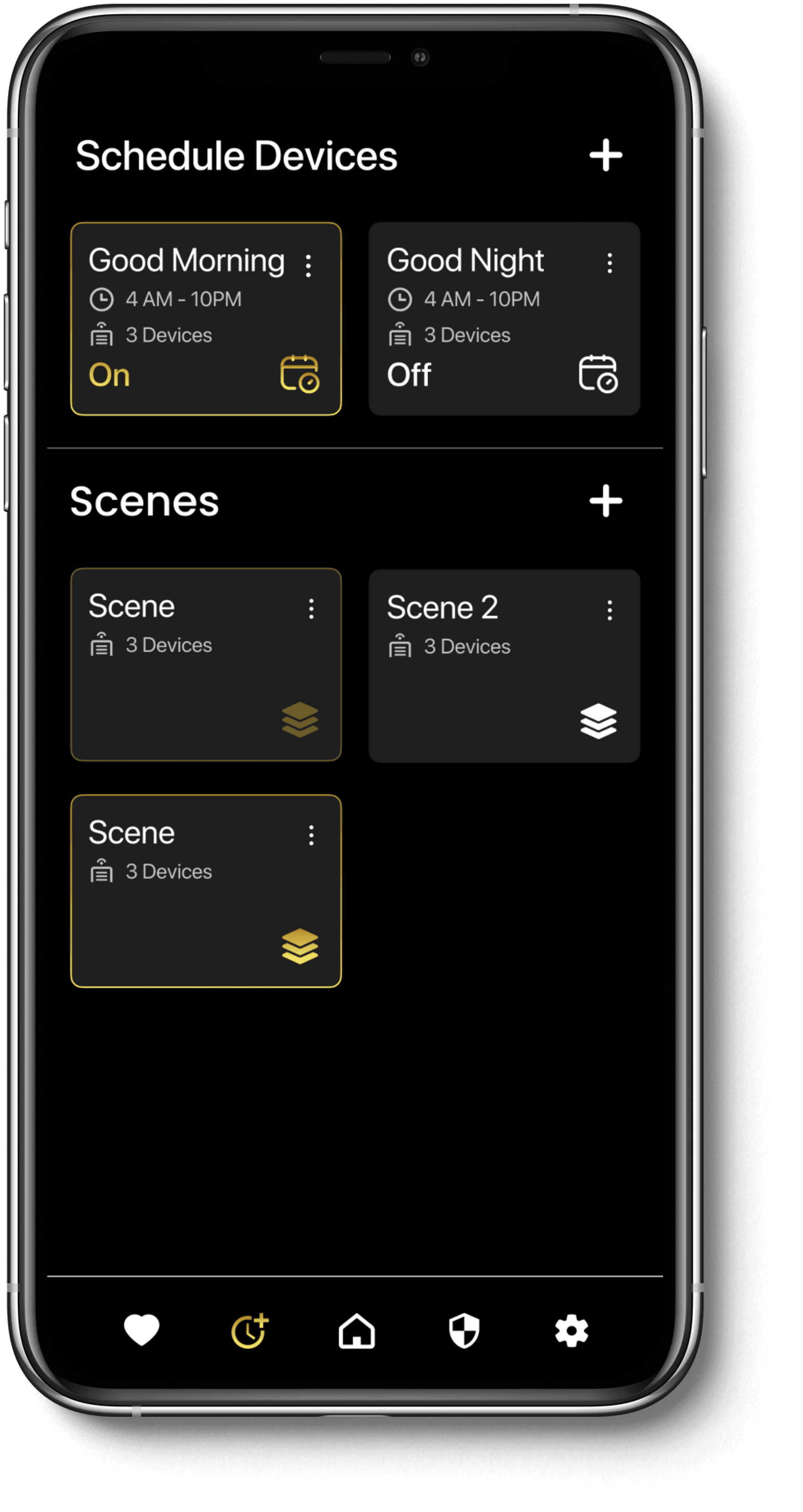
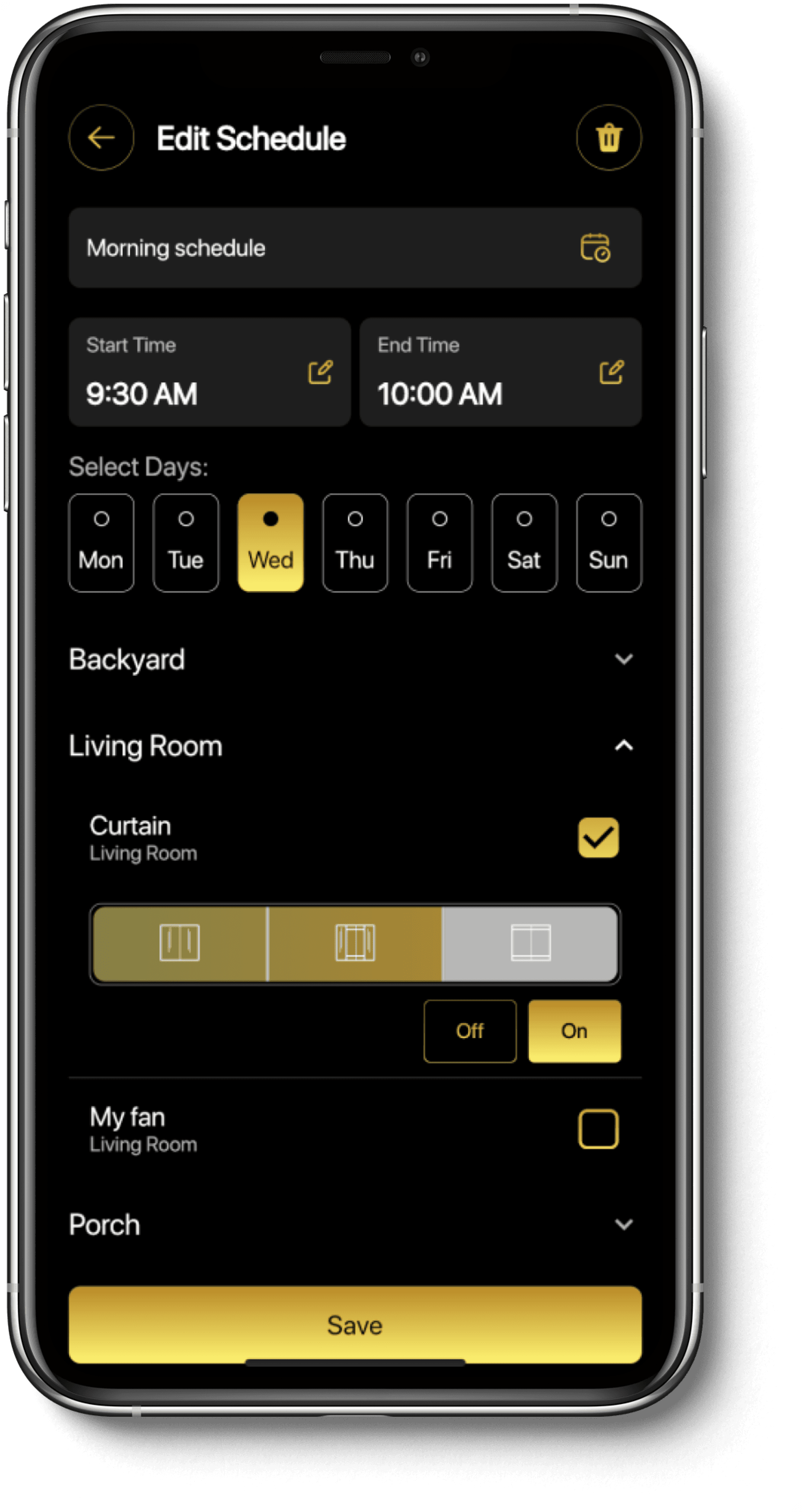
Time-Based Scheduling: Offers an easy way to set schedules for multiple devices, automating operations to align with user routines and preferences.
Favorites and Grouping: Allows users to set devices, schedules, and scenes as favorites and group devices for easy control, streamlining the user interface and enhancing accessibility.
Over-the-Air (OTA) Firmware Updates: Provides easy OTA device firmware updates, ensuring devices remain up-to-date with the latest features and security patches.
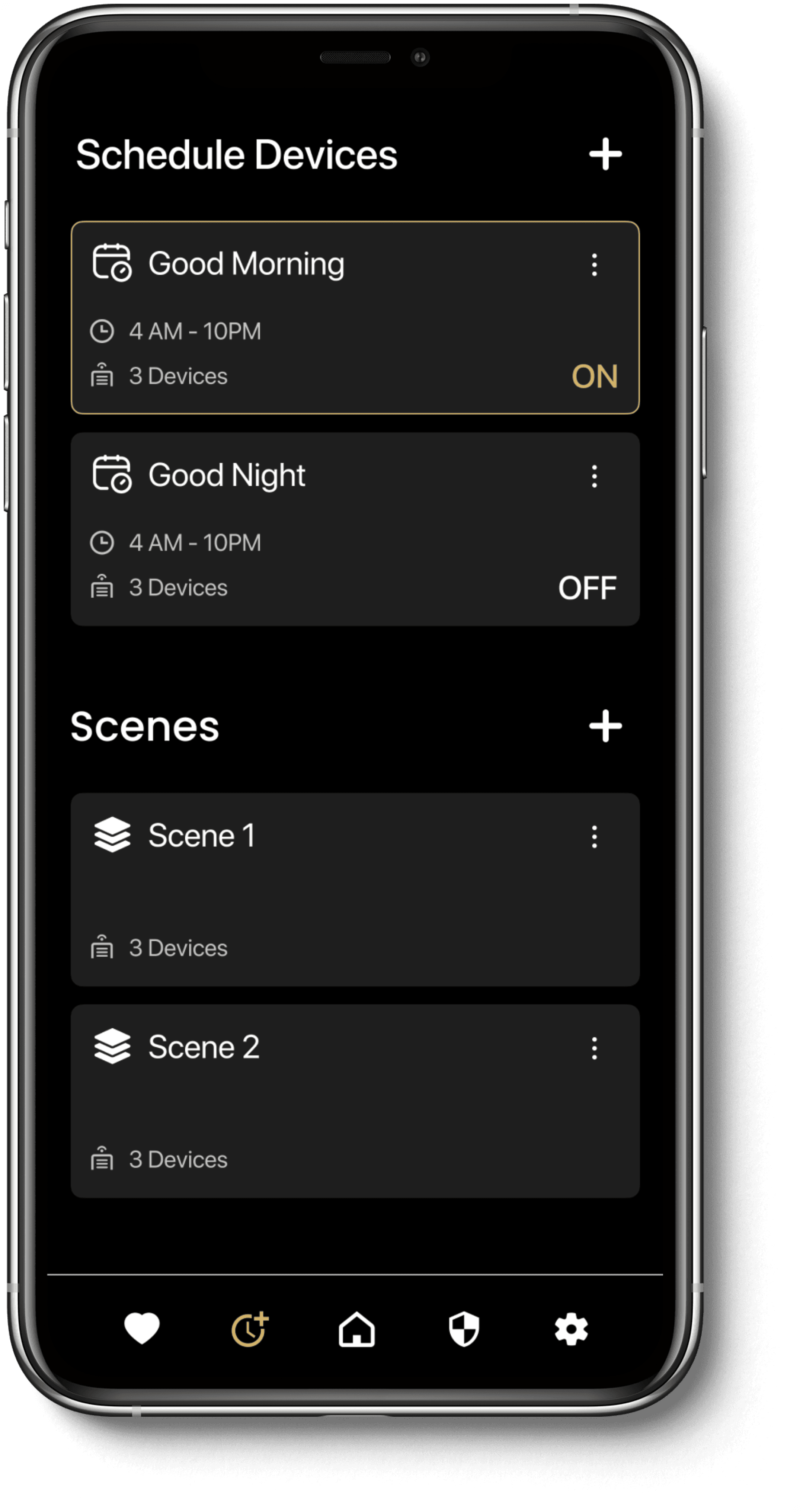
Sensor-Based Security Scenes: Enables users to operate devices by setting sensor-based security scenes, enhancing home security through automation.
Instant Notifications: Delivers instant notifications for device operations, keeping users informed about the status and activities of their devices.
Offline Functionality: Ensures that users can control devices even without internet connectivity, providing reliability and continuous access.
Voice Assistant Integration: Supports control with Google Assistant and Alexa, allowing users to operate devices through voice commands for added convenience.
Theme Support: Offers light and dark theme options, catering to user preferences and enhancing visual comfort.
Design and Development Process
The development of NexGen Homes followed a structured, user-centric approach to ensure the application met the diverse needs of its users:
User Research and Requirement Gathering: Conducted surveys and interviews with potential users to understand their needs, preferences, and pain points related to smart home device management.
Feature Prioritization and Planning: Based on user feedback and technical feasibility, identified and prioritized features that would deliver the most value, focusing on usability, security, and integration capabilities.
Wireframing and Prototyping: Developed wireframes and interactive prototypes to visualize the app’s layout, navigation, and key functionalities, ensuring an intuitive and user-friendly interface.
Agile Development: Implemented the application using agile methodologies, allowing for iterative development, continuous testing, and incorporation of user feedback throughout the process.
Integration and Testing: Ensured seamless integration with various smart devices and conducted extensive testing, including usability testing and beta testing with actual users, to gather feedback and make necessary improvements.
Deployment and User Training: Released the app on relevant platforms and provided user guides and support to facilitate smooth adoption and usage.
Post-Launch Support and Updates: Established channels for user support and feedback, enabling continuous improvement and timely updates to address emerging needs and technological advancements.
Key Features in Detail
Unified Remote Control and Status Monitoring: Users can control and monitor all connected devices from a single interface, organized by location and room, simplifying device management and enhancing user experience.
Device Access Sharing: Allows users to grant access to specific devices to family members or trusted individuals, facilitating collaborative control while maintaining security and privacy.
Time-Based Scheduling: Enables users to automate device operations by setting schedules, aligning device functionality with daily routines, and improving energy efficiency.
Favorites and Grouping: Users can mark frequently used devices, schedules, and scenes as favorites and group devices for simultaneous control, streamlining operations and enhancing accessibility.
Over-the-Air (OTA) Firmware Updates: Provides a straightforward process for updating device firmware, ensuring devices have the latest features and security enhancements without requiring manual intervention.
User Persona Highlights
Persona 1: Name: Emily, 32 Occupation: Working Professional Needs: Energy efficiency, remote control, and easy integration with existing devices. Usage: Uses NexGen Homes to manage devices and schedules while at work.
Persona 2: Name: Robert, 45 Occupation: Tech Enthusiast Needs: Advanced features like predictive analytics and offline control. Usage: Explores security scenes and shares access with family members.
Impact and Results
Since its launch, NexGen Homes has significantly enhanced the smart home experience for users:
Increased User Engagement: The intuitive interface and comprehensive control features have led to a 30% increase in daily active users within the first six months.
Enhanced Security: Sensor-based security scenes and instant notifications have provided users with greater peace of mind, resulting in a 25% reduction in security-related incidents reported by users.
Energy Efficiency: Time-based scheduling and electricity usage predictions have enabled users to optimize their energy consumption, leading to an average 15% reduction in household energy bills.
Positive Feedback: User reviews highlight the app's ease of use, reliability, and the convenience of controlling multiple devices from a single platform.
Challenges and Learnings
The development and deployment of NexGen Homes presented several challenges:
Device Compatibility: Ensuring seamless integration with a wide range of smart devices required extensive testing and collaboration with device manufacturers.
User Education: Educating users about the app's features and benefits was essential to encourage adoption and effective utilization.
Data Privacy: Implementing robust data security measures was crucial to protect user information and maintain trust.
Market Research and Competitive Analysis
Objective: To comprehensively understand the smart home automation market, identify existing gaps, and develop a product that offers a competitive edge.
Findings:
Market Trends:
Energy Efficiency: Consumers are increasingly seeking solutions that reduce energy consumption and lower utility costs. The global smart home market is projected to grow from USD 121.59 billion in 2024 to USD 633.20 billion by 2032, exhibiting a CAGR of 22.9% during the forecast period.
Seamless Integration: There's a strong demand for platforms that can integrate various devices into a unified system, simplifying user control and enhancing the overall experience.
Competitor Insights:
Offline Functionality: Many existing applications rely heavily on continuous internet connectivity, limiting usability during outages or in areas with poor connectivity.
Predictive Electricity Usage: Few competitors offer analytics that predict energy consumption, leaving users without insights to optimize their usage.
Security Automation: Robust, user-friendly security features, such as sensor-based automation, are often lacking in current market offerings.
User Needs:
Ease of Use: Users prioritize intuitive interfaces that require minimal learning curves.
Centralized Control: A single platform to manage all smart devices is highly desirable.
Voice Assistant Compatibility: Integration with popular voice assistants like Alexa and Google Assistant is increasingly expected.
Impact on NexGen Homes: These insights directly influenced the development of NexGen Homes, leading to the inclusion of:
Offline Functionality: Ensuring users can control devices without internet access.
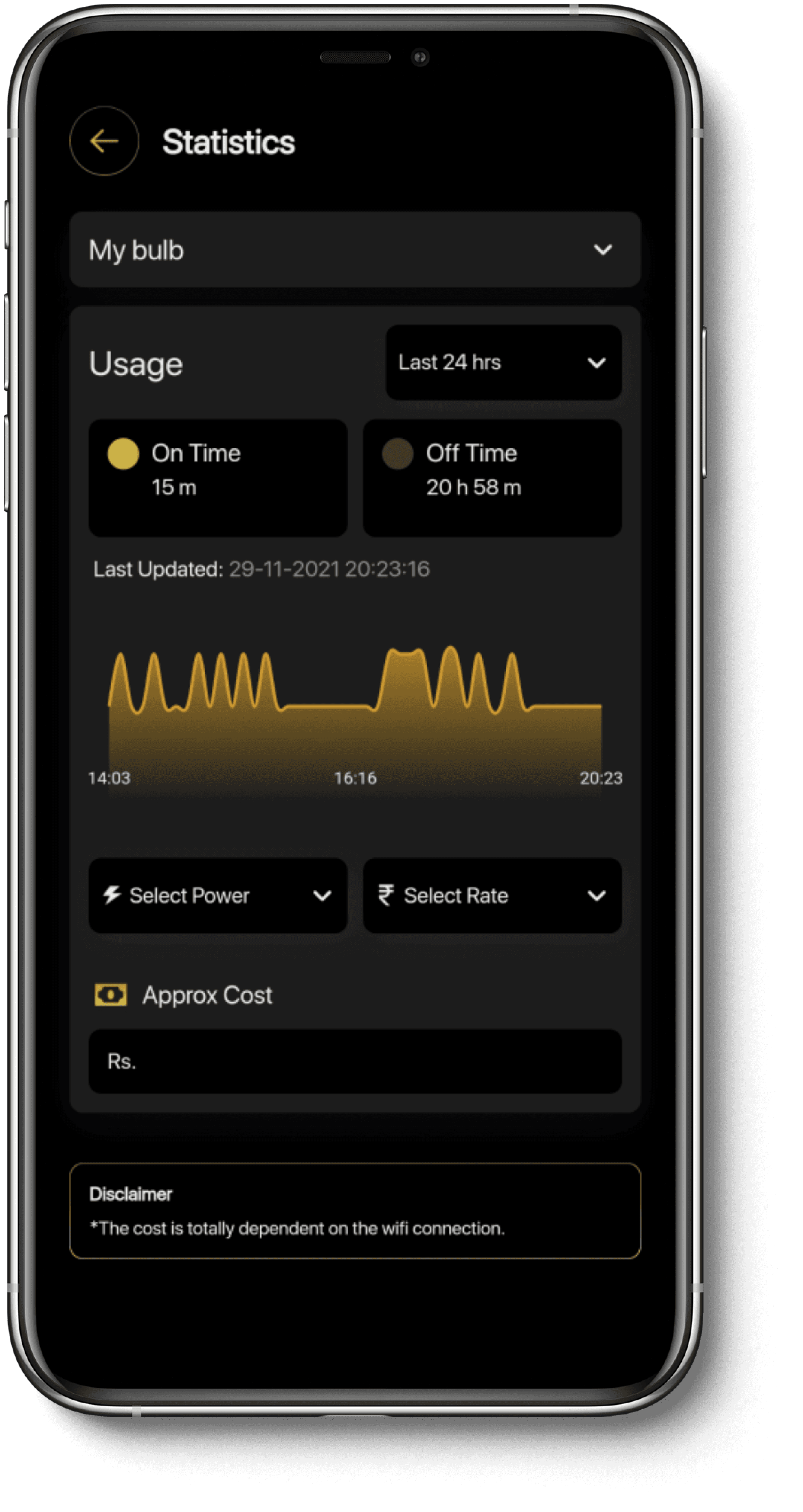
Electricity Prediction Capabilities: Providing analytics to help users monitor and reduce energy consumption.
Enhanced Security Automation: Implementing sensor-based scenes to bolster home security.
User Journey and Experience Mapping
Objective: To design a seamless and intuitive user journey, enhancing user satisfaction and engagement.
Stages in the User Journey:
Onboarding:
Account Setup: Streamlined registration with options for social media integration to expedite the process.
Tutorials: Interactive guides introducing key features, allowing users to explore functionalities at their own pace.
Device Pairing: Simplified processes with step-by-step instructions and visual aids to assist first-time users.
Daily Usage:
Dashboard Access: Customizable interfaces organized by location and room, enabling quick access to frequently used devices.
Favorites and Grouping: Options to mark devices, schedules, and scenes as favorites and group devices for simultaneous control, streamlining daily operations.
Advanced Features:
Scheduling and Scenes: User-friendly tools to set up time-based schedules and sensor-triggered scenes, automating routine tasks.
Voice Control: Seamless integration with voice assistants, allowing hands-free operation of devices.
Post-Purchase Support:
OTA Updates: Automatic over-the-air updates to keep devices current with the latest features and security patches.
Notifications: Real-time alerts for device operations, maintenance reminders, and security events, keeping users informed and engaged.
Sustainability and Environmental Impact Energy Efficiency Features:
Consumption Analytics: Detailed reports on energy usage per device, enabling users to identify high-consumption appliances and adjust usage patterns.
Optimization Suggestions: Personalized recommendations based on usage data to further reduce energy consumption.
Carbon Footprint Reduction:
Smart Scheduling: Automation of device operations to minimize unnecessary power usage, contributing to lower carbon emissions.
Environmental Impact Display: Visual representations of the user's positive environmental contributions, encouraging eco-friendly behavior.
ROI and Business Benefits
Increased Customer Satisfaction:
User Feedback: Surveys indicate over 90% of users report enhanced convenience and control over their smart home devices.
Retention Rates: High user satisfaction has led to increased retention and positive word-of-mouth referrals.
Revenue Growth:
Device Sales: The app's success has driven a 20% increase in sales of Watt Inventive smart devices.
Subscription Services: Introduction of premium features has opened new revenue streams, contributing to overall growth.
Market Differentiation:
Unique Features: Offline functionality and predictive analytics have set NexGen Homes apart from competitors, attracting a broader user base.
Brand Reputation: The app's success has enhanced WattInventive's reputation as an innovator in the smart home industry.
Conclusion
The development and deployment of NexGen Homes have significantly advanced the smart home automation landscape. By conducting thorough market research, the team identified critical gaps in existing solutions, such as the need for offline functionality, predictive energy analytics, and robust security automation. Addressing these gaps, NexGen Homes offers a user-centric platform that simplifies device management, enhances energy efficiency, and bolsters home security.
The application's intuitive design ensures a seamless user journey—from effortless onboarding to daily interactions and advanced feature utilization. Its commitment to sustainability is evident through features that promote energy conservation and reduce carbon footprints. The positive reception from users, coupled with notable business growth and market differentiation, underscores NexGen Homes' success in meeting and exceeding user expectations.
In summary, NexGen Homes exemplifies how innovative technology, grounded in comprehensive research and focused on user needs, can deliver substantial benefits to both consumers and businesses in the evolving smart home industry.